

Airbnb Survey Examines US Latino Holiday Gatherings and Travel
Posted
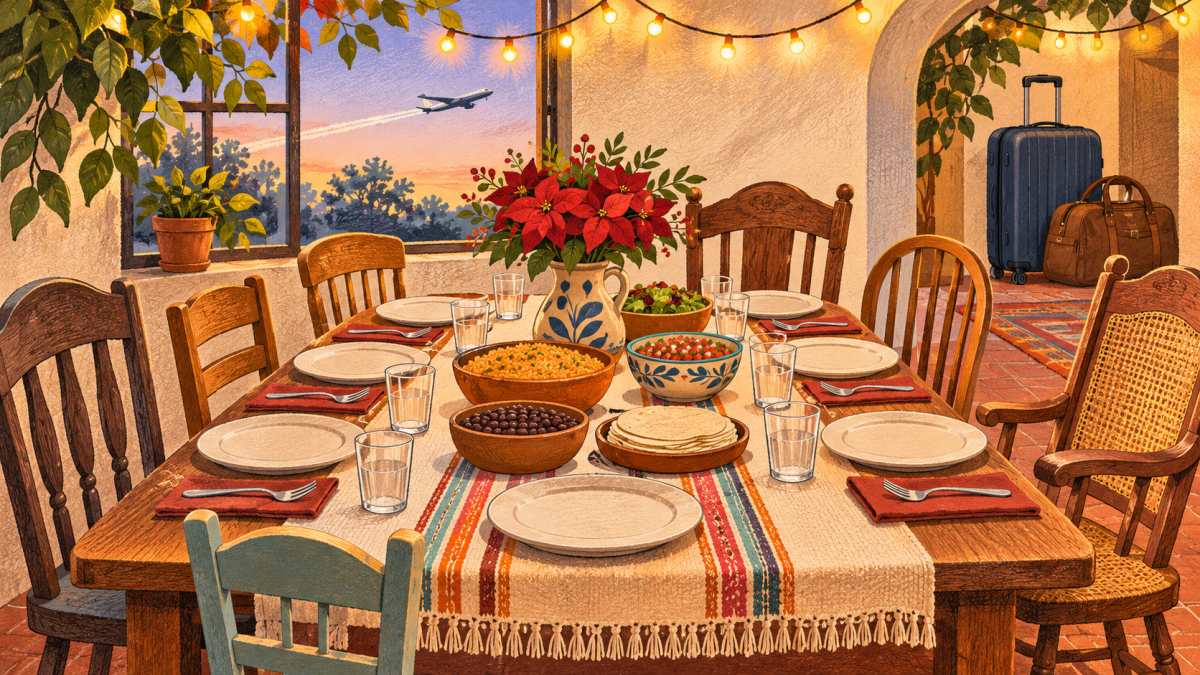
Shared meals and gatherings across generations are prominent in US Latino holiday travel plans, according to research Airbnb released Nov. 17. The company combines a commissioned survey with its own search and booking data to describe travel around celebrations from Thanksgiving through Día de los Reyes.
The findings concern a defined research sample and Airbnb activity. They are not a census of US Latino families, and they do not establish that every household celebrates the same holidays or travels in the same way. The company published the research as part of a promotional account of holiday stays, making its methods and commercial context important to understanding the numbers.
Meals and room for conversation
More than half of US Latino holiday travelers in the survey planned to prepare or share a Nochebuena meal, according to Airbnb. Nochebuena falls on Dec. 24. Nearly 20% planned travel for Día de los Reyes on Jan. 6, compared with less than 5% of non-US Latino travelers in the survey.
The company also asked about sobremesa, the practice of spending time together at the table after eating. More than 70% of US Latino respondents said having space for it was essential on a holiday trip, compared with nearly 50% of non-US Latino adults. Nearly 80% said their families needed a comfortable place to sit together without feeling rushed.
These responses describe preferences, not completed travel. They also point to something different from the number of rooms booked: the importance respondents place on shared spaces and time together. Airbnb says nearly 70% wanted a full kitchen for holiday meals, while half looked for a large dining table.
Group searches are not the same as bookings
In its platform analysis, Airbnb says nearly 60% of Christmas searches among the group it identifies as US Latino were for five or more guests. More than 20% sought accommodation for at least 10. Nearly 30% of New Year's searches were for groups of 10 or more.
Those are search shares. They do not show that all the searches produced bookings or that the proposed groups ultimately traveled. The distinction is particularly useful when assessing a holiday season that has not yet taken place.
The company separately reports that half of Christmas bookings by the group last year were within driving distance of home. That is a historical booking observation, not a forecast for every family this year. It also differs from the survey's statements about intended travel.
Generations and shared costs
Nearly one in four US Latino holiday travelers surveyed expected three or more generations to stay together. Airbnb says that was nearly twice the share among non-US Latino holiday travelers. Nearly half planned to share lodging costs with relatives, and more than 80% said staying within budget helped everyone travel together.
These findings describe respondents' expectations and priorities. They do not establish that a vacation rental is cheaper than a hotel, that a particular listing suits a family, or that the same arrangement works for all households. The release provides no comparable, independently verified price study supporting those conclusions.
How the research was conducted
Blue Point Analytix conducted the quantitative survey and qualitative research on Airbnb's behalf. The overall sample included 1,012 US Latino adults and 403 non-US Latino adults. The holiday-travel results came from respondents indicating overnight travel between Thanksgiving and Día de los Reyes: 790 US Latino respondents and 288 non-US Latino respondents.
Those subset sizes matter because a percentage about holiday travelers should not automatically be applied to the full sample, much less to every US adult. Qualitative work in the research also examined themes in gathering preferences and cultural traditions; it is distinct from a count of platform transactions.
Airbnb's internal data use Spanish-language navigation as a proxy for US Latino guests. Language setting does not directly establish ethnicity, and the two should not be treated as interchangeable. Some Latino guests use English, while a Spanish-interface user need not fit the demographic category the company is trying to describe.
The platform data cover holiday check-in dates between Thanksgiving and Día de los Reyes. The methodology also states that destination-growth comparisons use searches by signed-in Spanish-language guests during January–September 2026 against the same period in 2025. Those comparisons have their own dates and should not be presented as completed bookings for the coming holidays.
The release offers a detailed company view of family travel preferences, with survey responses, historical bookings and current searches supplying different kinds of evidence. Its clearest finding is the prominence of shared meals, group space and multigenerational gatherings within the research population. Broader claims about all Latino households, national spending or a lasting travel trend would require additional evidence beyond this release.
Christmas searches have a specific comparison group
Airbnb says nearly 40% of holiday searches in its US Latino category were for Christmas stays, compared with 29% among non-US Latino travelers. That comparison describes the share of holiday searches in each group. It does not measure the share of all families celebrating Christmas, the number of unique travelers, or how much either group will spend. The search categories and the survey populations remain separate parts of the company's evidence.