

UNEP Puts Household Wastewater in Focus During Antimicrobial Awareness Week
Posted
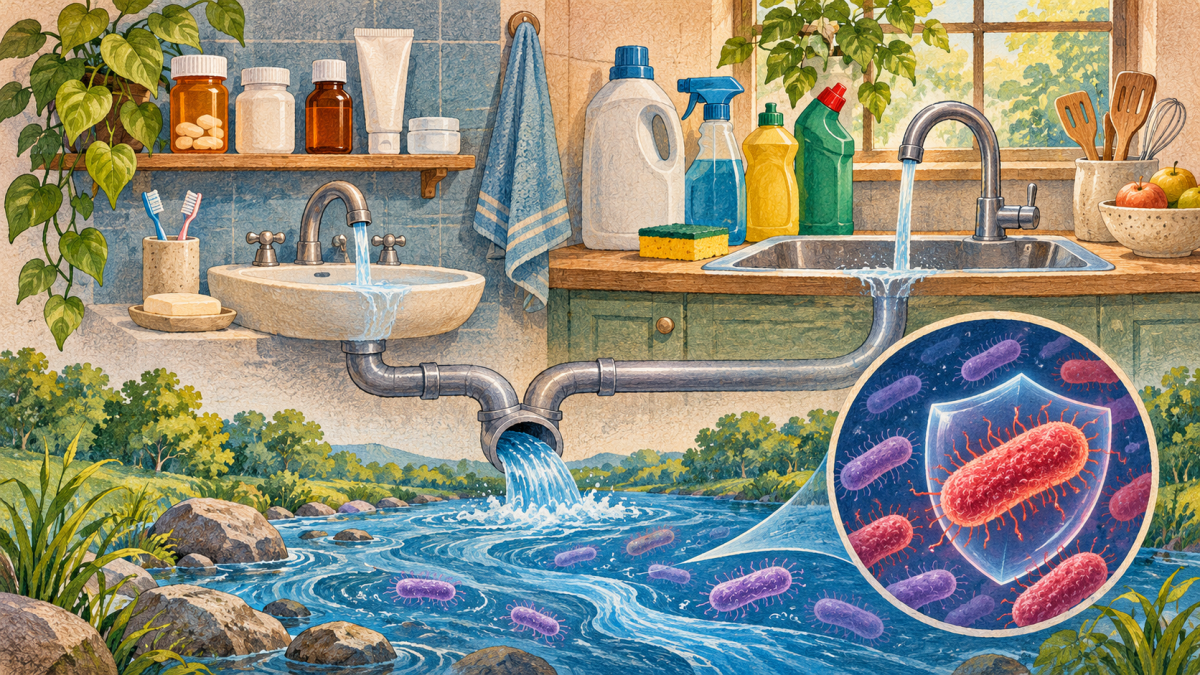
Household wastewater is part of the environmental challenge of antimicrobial resistance, the UN Environment Programme said in a Nov. 18 report released during World AMR Awareness Week. The agency's account examines medicines, pet treatments, antibacterial personal-care products and disinfectants that can release antimicrobial substances into waste streams.
UNEP describes antimicrobial resistance as a process in which infections in people, animals and plants become difficult or potentially impossible to treat. Its focus is the environmental pathway: residues released through wastewater can interact with microorganisms, creating conditions associated with resistance.
The agency does not suggest households are the only source. It also identifies effluent from farms, factories and health-care facilities. The report places domestic use and disposal within that larger pollution problem, alongside responsibilities for governments, industry and the health-care sector.
Medicines and disposal systems
Unused medicines are one area of concern. UNEP says disposal in household bins, toilets or sinks can introduce pharmaceutical substances into waste and wastewater systems. Its report points to pharmacy take-back programs and other locally available return arrangements as ways to keep unwanted medicines out of those streams.
The same issue extends to veterinary products kept at home. Antibiotics and antiparasitic treatments used for animals can also reach the environment. UNEP highlights the importance of veterinary instructions and locally available arrangements for returning unused products.
These are agency statements about responsible use and disposal, not a change to an individual's prescription or treatment plan. The report says people should follow qualified health professionals' instructions and should not share leftover antibiotics or use them to self-medicate. It does not establish that every pharmacy or veterinary office accepts returned medicine; local arrangements differ.
Antibacterial products and uncertainty
UNEP also examines soaps and personal-care products containing antimicrobial ingredients. The agency says some antibacterial products may add environmental risks without providing additional protection for routine use compared with ordinary soap and water.
The report discusses triclosan as an example of an ingredient that can affect aquatic organisms and endocrine systems. It explicitly notes that more evidence is needed to determine its contribution to antimicrobial resistance. That qualification matters: concern about a chemical's environmental effects is not the same as a fully established estimate of its role in every resistant infection.
Other products discussed include toothpaste, mouthwash, cosmetics, deodorants and skin-care formulations. UNEP says ingredients washed away during normal use can enter wastewater. It also notes that scientists are still assessing the risks associated with several substances.
Cleaning products are another pathway
Household disinfectants and antibacterial wipes can contain biocides, including quaternary ammonium compounds. UNEP says overuse and subsequent environmental release may contribute to resistance. Its report emphasizes using products according to their instructions and following the relevant disposal directions and local guidance.
The agency's message is broader than replacing a single product. It connects purchasing, appropriate use, storage and disposal with the pollution entering waste systems. At the same time, UNEP says institutional action remains essential because household behavior addresses only one part of the challenge.
World AMR Awareness Week runs Nov. 18–24. The newly published report adds an environmental dimension to that campaign: the substances used in homes can continue to affect ecosystems after they leave the sink, bathroom or medicine cabinet.