

FAO Sees Ample Grain Supplies but Growing Trade and Input Risks
Posted
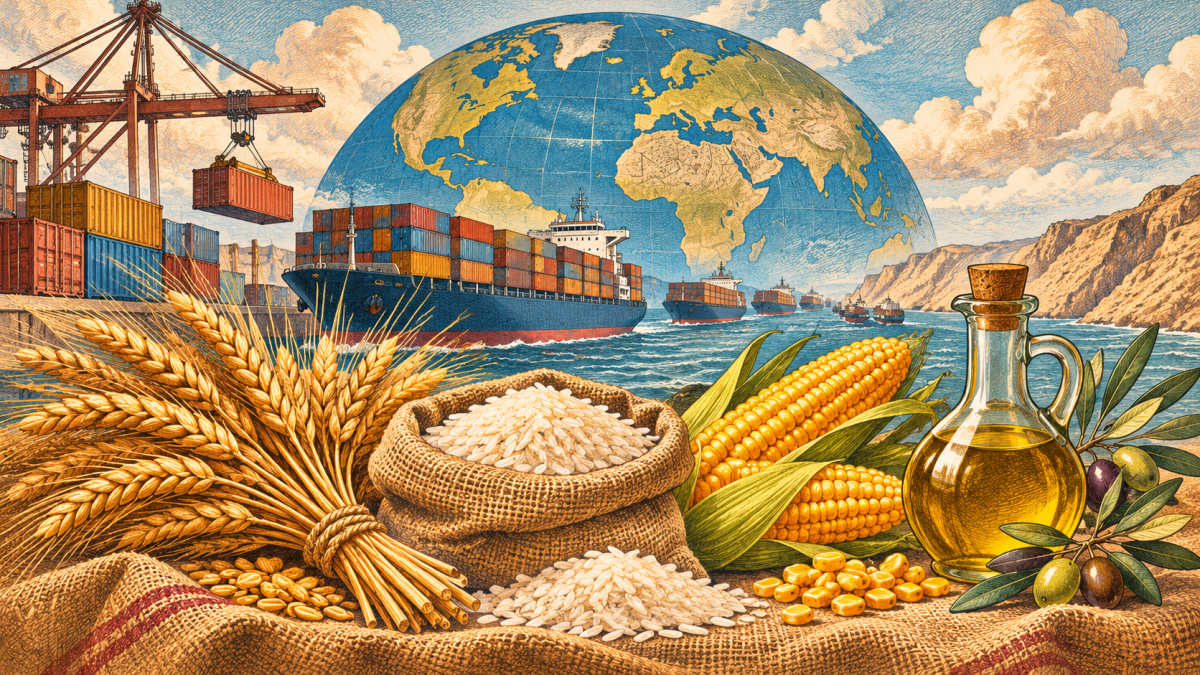
Global agricultural supplies remain broadly ample, but disruptions to shipping and fertilizer markets are complicating that picture, the Food and Agriculture Organization of the United Nations said in its Food Outlook released Nov. 19. The report describes comfortable supplies of wheat and coarse grains while identifying tighter balances for rice, sugar and vegetable oils.
The distinction between available supplies and the ability to move them is central to the new assessment. FAO forecasts an increase in cereal stocks even as world cereal trade contracts. Grain accumulating in an exporting country is not the same as grain successfully reaching an importing market, and the agency says export constraints are creating storage and marketability concerns.
More stocks, less cereal trade
FAO projects global cereal stocks will rise 1.8% by the close of seasons ending in 2027. Much of the expected increase reflects wheat inventories in Russia and Ukraine, where shipping disruptions are limiting exports. The agency forecasts world cereal trade will decline 3.3% in 2026–27, driven almost entirely by lower wheat shipments.
Wheat and corn production are expected to remain above their respective five-year averages. Rice presents a different picture: FAO forecasts the first production decline in four seasons because of weaker producer margins and adverse weather associated with El Niño. Production is expected to fall short of use, although large stocks carried into the season could leave reserves at their second-highest level on record.
The report also anticipates record oilseed production in 2026–27. That does not translate into rebuilding all oil inventories. FAO says strong demand for vegetable oils from biofuels is likely to draw down oils and fats stocks further. It also forecasts sugar production will fall below expected consumption in 2026–27.
Black Sea bottlenecks and fertilizer costs
Combined grain shipments from Ukraine's Greater Odesa ports and Russia's Sea of Azov and Black Sea ports fell below 0.5 million metric tons in September 2026, compared with 7.8 million a year earlier, according to the report. FAO says Argentina, Australia and the European Union are increasing their shares of world wheat exports as routes and trading patterns adjust.
Those figures describe a specific month and group of ports. They are not totals for every Ukrainian or Russian export route, and they should not be treated as a full-year measure. The report's concern is that constrained shipments can leave more grain in storage, putting pressure on capacity and potentially affecting quality.
A separate chapter examines fertilizer affordability. FAO expects global nitrogen fertilizer production, including ammonia and urea, to decline in 2026, largely because of disruptions to energy supplies, production and trade associated with closure of the Strait of Hormuz.
The agency compares fertilizer costs with crop prices for corn in Brazil, wheat in the European Union, rice in Southeast Asia and soybeans in the United States. Affordability deteriorated across all four measures and was below the long-term baseline by midyear, reaching its lowest levels between April and June. These are market comparisons, not a calculation of any individual farm's expenses or expected returns.
Livestock and fisheries face different pressures
FAO forecasts moderate growth in global meat production in 2026, led by poultry, while beef and sheep-meat production are expected to decline amid tight animal supplies. Milk production is projected to increase 1.8%, with dairy trade growing 2.1% from the previous year.
The fisheries outlook also separates different sources of production. Total fisheries and aquaculture output is forecast to rise only 0.3%. Capture production is expected to decline 3.4%, while aquaculture grows 3.6%. FAO links weaker wild catches partly to El Niño's effect on Peruvian anchoveta and to higher fuel costs. Reduced anchoveta supplies are also raising feed costs for some farmed species.
Import costs are still rising
The agency estimates the global food import bill will reach $2.267 trillion in 2026, an increase of 1.9%. That would be a slower rise than the nearly 8% increase in 2025, largely because of lower coffee and cocoa prices. The projected bill for cereals rises 3%, while the oilseed and related fruits bill rises 9.9%.
These figures measure international import expenditures, not supermarket inflation or the cost of a household food basket. Likewise, the production, stock and trade estimates remain forecasts that can change with weather, policy and transport conditions. The report's overall message is that ample aggregate supplies can coexist with substantial pressure in particular commodities and trade corridors.
Olive oil, whey and the distribution of costs
The report's special chapters also show why broad commodity totals can conceal sharply different market conditions. FAO provisionally forecasts world olive oil output at a record 3.7 million metric tons in 2026–27, with consumption rising 6%. Spain, the largest producer, is expected to increase output 22.7% to 1.6 million metric tons.
The price observations refer to a different period. Spanish wholesale extra-virgin olive oil prices were 18.3% below their level a year earlier in September 2026, while prices in Bari, Italy, were more than 50% lower. Those wholesale comparisons do not establish the change in retail prices in every importing country.
Another chapter examines strong demand for high-protein whey ingredients and its potential influence on cheese-processing economics. FAO says the benefits are likely to concentrate among processors with the capacity to process whey. Its livestock-feed analysis similarly emphasizes differences between production systems: rising oilmeal and energy costs affect margins differently depending on output prices and feed composition. The agency describes substitution and efficiency efforts, while noting that nutritional and economic constraints limit how far producers can adjust.
| Measure | Period | Forecast change |
|---|---|---|
| Cereal stocks | Seasons ending in 2027 | +1.8% |
| World cereal trade | 2026–27 | −3.3% |
| Milk production | 2026 | +1.8% |
| Global food import bill | 2026 | +1.9% |
Source: FAO Food Outlook release, Nov. 19, 2026. Forecasts measure different quantities and are not directly additive.