

FAO Urges Rural Jobs and Coordinated Programs as Hunger Goal Remains Distant
Posted
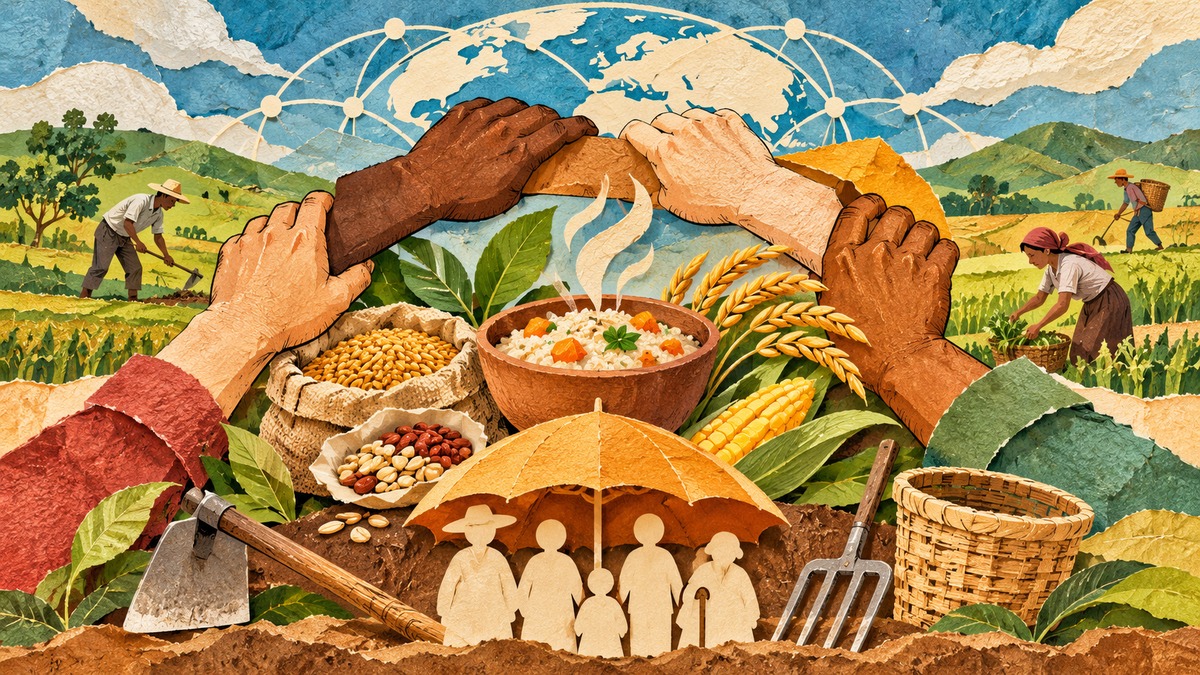
The United Nations Food and Agriculture Organization is urging governments to combine job creation, rural development and coordinated social programs as they work toward eliminating hunger by 2030. The call came at a Rome event marking the second anniversary of the Global Alliance against Hunger and Poverty, alongside the launch of a report on progress and the work still required.
FAO’s account, published Nov. 19, describes the event held at its headquarters the previous Wednesday. Chief Economist Máximo Torero argued that employment and stronger rural economies can help prevent families from falling back into hunger, while coordinated programs can address gaps that fragmented development efforts leave behind.
The report, The Race to 2030: Recent Progress against Hunger and Poverty and Lessons for Acceleration, estimates that 645 million people experienced hunger in 2025. That was about 14 million fewer than in the preceding year and the third consecutive annual decline, according to FAO. The report nevertheless projects around 510 million people will still face hunger in 2030 on current trajectories.
Different circumstances require different support
Torero identified two groups of countries needing particular attention. Those close to eliminating hunger and poverty need to protect their gains. Social protection, school feeding and support for small-scale farmers were among the measures he highlighted for that purpose.
Countries in fragile situations face a different combination of obstacles. The FAO account points to high debt, conflict and recurrent extreme weather, often occurring together. In those settings, a program addressing only one problem may leave households exposed to others.
The distinction is important to the report’s central argument. Reducing hunger is not presented as a single intervention that every country can apply in the same way. Country ownership, financing and coordination among institutions are part of the approach, alongside measures directed at food and incomes.
FAO cited Brazil and the Dominican Republic as examples of significant progress, while noting that countries affected by conflict continue to struggle. The article does not provide a uniform country-by-country ranking or a detailed comparison of those national programs. Its emphasis is on consolidating advances while responding to more difficult conditions elsewhere.
Alliance tracks actions and offers of support
The Global Alliance, launched by Brazil’s President Luiz Inácio Lula da Silva at the 2024 G20 Summit, now includes 223 countries and organizations. The membership number combines national governments with organizations; it is not a count of 223 countries.
Its implementation planning and partnership-building process spans 20 countries. The new report documents 146 actions involving 81 members and says members have submitted more than 100 expressions of interest in supporting country plans. Most of those offers involve technical assistance and sharing knowledge.
These measures represent different stages of cooperation. An expression of interest is not the same as a completed project, and a recorded action is not necessarily a separate country. Keeping those categories distinct avoids overstating the scale of implementation or treating all announced support as financing already delivered.
The report was prepared by the Alliance’s support mechanism with FAO, the International Labour Organization, the School Meals Coalition Secretariat, UNICEF and the World Bank Group. The event also included representatives of Brazil, Spain and the World Bank alongside the Alliance leadership.
Financing pressure and climate risks remain
FAO says the present El Niño cycle could push tens of millions more people into acute food insecurity next year. That warning concerns a possible future deterioration and should not be treated as an additional count of people already experiencing hunger in the report’s 2025 estimate.
The organization also points to falling official development assistance as a constraint on the response. Its argument for coordination is partly about making programs more effective when resources are tightening, rather than assuming that all required funding will become available automatically.
The report estimates that lifting everyone in extreme poverty above the $3-a-day line would cost roughly $311 billion annually, or about 0.17% of global gross domestic product. This is an estimated annual requirement, not a new contribution announced at the Rome event. It also addresses extreme poverty, which is related to but not identical to the hunger measure.
The new report’s outlook leaves a substantial gap between projected progress and the goal of eliminating hunger. The next phase for the Alliance is to turn country plans, offers of technical support and documented actions into sustained implementation. The Rome event’s central message was that protecting incomes and rural livelihoods must accompany food-focused programs if recent gains are to last.