

UNICEF Calls for Funded Child Protection Systems at Manila Conference
Posted
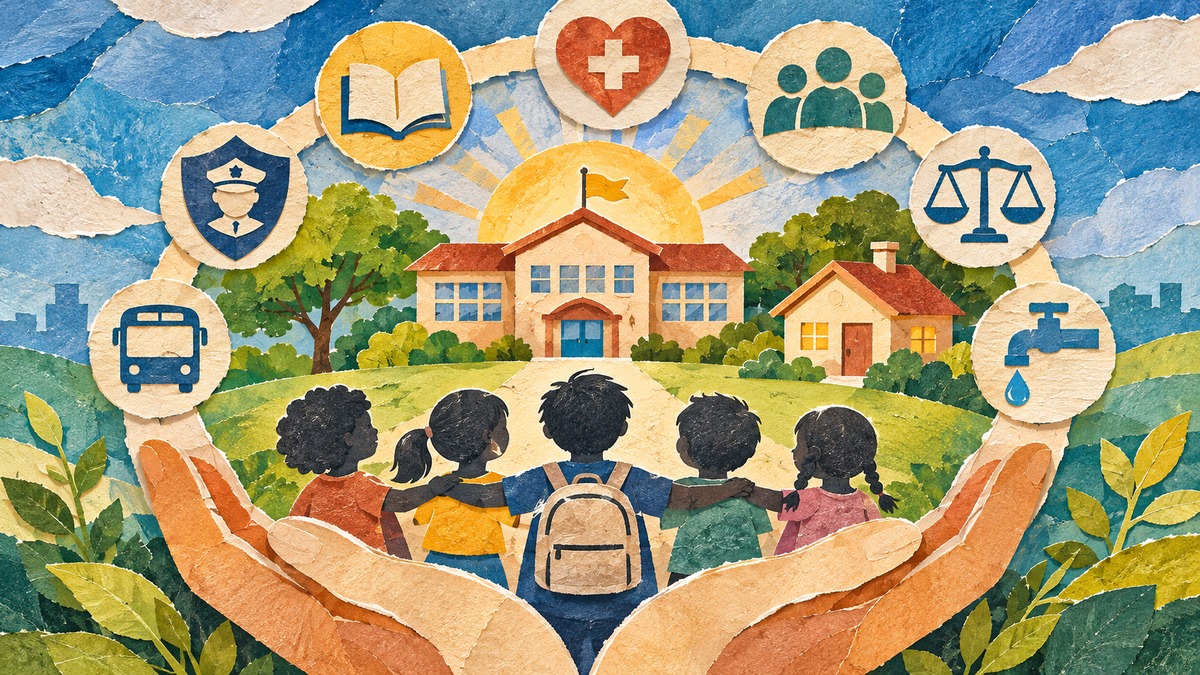
UNICEF called for sustained investment in child protection systems as ministers, young people, survivors and partner organizations gathered in Manila for the Second Global Ministerial Conference on Ending Violence Against Children. In a Nov. 18 briefing, the agency urged governments to turn earlier commitments into practical support for families, safer schools and accessible services.
The conference was scheduled for Nov. 18–19 in the Philippines. UNICEF’s release describes its priorities as the meeting began; it does not establish which new commitments governments ultimately adopted at the conclusion. The agency’s central appeal was for financing and implementation, rather than another set of statements alone.
The call follows commitments made at a conference in Bogotá two years earlier. UNICEF argues that governments already have evidence on measures that can help prevent violence, but that protection depends on sustained systems reaching children in their homes, schools and communities.
Different figures describe different harms
The agency’s briefing brings together several global estimates. It says 1.6 billion children, about two in three, experience violent discipline by parents or other caregivers at home. The category includes physical punishment, psychological aggression or both; it is broader than severe physical punishment alone.
UNICEF also estimates that around 610 million children live with mothers who experienced intimate partner violence in the preceding year. That figure describes children’s household circumstances. It is not a separate count that can simply be added to the violent-discipline estimate, because the groups may overlap.
For sexual violence in childhood, the release cites approximately 650 million girls and women and 410 million to 530 million boys and men alive today. These are estimates of childhood experiences among people currently living, including adults. They should not be reported as the number of children experiencing abuse during a single recent year.
Within that broader category, UNICEF gives separate estimates for rape or sexual assault. Those figures are included within the wider sexual-violence measures, rather than additional populations. The distinction matters when presenting the scale of the problem without counting the same people twice.
Online abuse findings have a defined scope
A separate set of findings concerns technology-facilitated sexual exploitation and abuse. UNICEF reports that around 20 million children ages 12 to 17 experienced such abuse in a single year across 21 countries. The briefing does not present that number as a total for every country in the world.
Nearly 60% of the cases in that study occurred on social media platforms. More than half, 57%, involved someone the child already knew, including peers, partners, friends or relatives. Those findings show that the reported risks were not limited to contact with strangers online.
More than 40% of cases were never shared with anyone, and fewer than 1% were reported to police, social workers or helplines. UNICEF says not knowing where to go or whom to tell was the most common reason for not reporting. Those percentages apply to the study’s cases and should not be generalized into a reporting rate for all violence against children.
Prevention and response both need support
The agency identifies support for parents and caregivers as one area for investment. It also calls for schools where children can learn safely and for response services that are accessible, inclusive and resilient. The proposed approach includes preventing harm as well as helping children who have already experienced it.
UNICEF reports reaching 60.2 million parents and caregivers with support for raising children without violence since 2022. Over the same broad period, it says it helped 19.9 million children who experienced violence obtain care and protection across 112 countries.
Those are program-reach figures, not proof that every person reached had the same experience or that violence has been eliminated in the participating countries. They describe the scope of the agency’s reported support. UNICEF also says legal bans on violent discipline that it has supported now protect more than 40 million children.
Funding is the next practical question
The Manila briefing asks governments to fully finance and expand measures that have evidence behind them. A commitment on paper and a functioning service are different stages: families need support they can reach, schools need systems that can respond and children need to know where help is available.
The release does not provide a new global funding total or a country-by-country assessment of implementation after the conference. Those remain questions for subsequent documents and national decisions. What the Nov. 18 announcement establishes is UNICEF’s demand that child protection be measured by sustained action and access to services, supported by carefully defined evidence on the harms those services are intended to prevent.
| Estimate | Scope |
|---|---|
| 1.6 billion children | Global violent-discipline estimate |
| Around 20 million children ages 12–17 | Technology-facilitated sexual exploitation and abuse in one year across 21 countries |
| 19.9 million children helped since 2022 | UNICEF care and protection support across 112 countries; program reach |