Government Announces $25 PBS Co-payment Freeze Through End of Decade
Posted
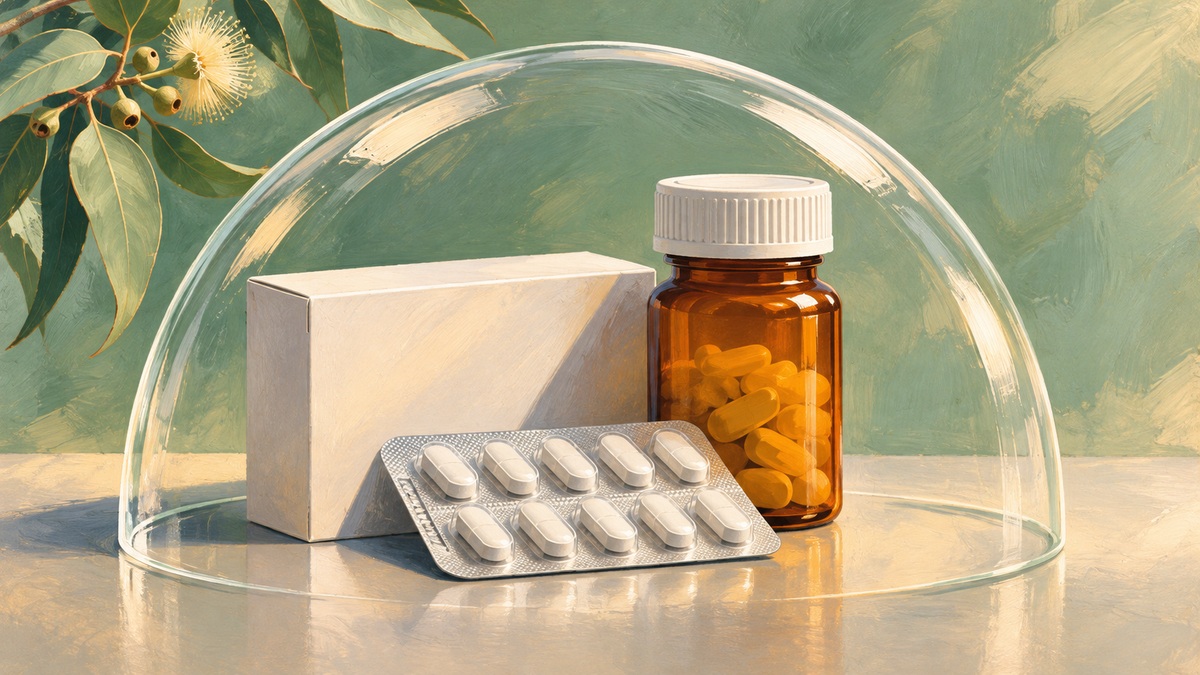
The Australian Government has announced that the maximum general patient contribution for Pharmaceutical Benefits Scheme medicines will remain at $25 through the end of the decade. The measure, announced on Monday, 23 November, is backed by a stated $242.6 million investment and is intended to prevent the usual annual indexation from increasing the ceiling.
The announcement builds on the reduction of the general PBS co-payment to $25 from 1 January 2026. It concerns the amount patients contribute towards eligible subsidised prescriptions, rather than setting a universal price for every medicine sold in Australia.
Pensioners and other eligible concession cardholders have a different maximum contribution, currently $7.70. The government linked its new announcement to the existing freeze for those patients. Keeping the general and concessional arrangements separate is essential for understanding who is affected and what a pharmacy charge actually represents.
What is being held at $25
PBS co-payments normally increase on 1 January in line with inflation. The government’s announcement is that the general maximum will instead stay at $25 until the end of the decade. A freeze holds the ceiling steady; it does not promise that every prescription currently costs exactly that amount.
The PBS can subsidise medicines whose full dispensed cost exceeds the patient contribution. Where the applicable price is lower than the maximum, the patient’s payment can also be lower. Eligibility, the particular medicine and any applicable additional charges still matter at the pharmacy counter.
The official PBS fee page records $25 for general patients and $7.70 for concessional patients in its current contribution table. Its explanatory notes also describe the pre-announcement position of general indexation resuming from January 2027. The fresh government release is therefore the source for the planned extension of the freeze, while the PBS table supplies the current payment framework.
That distinction avoids treating an announcement as if every supporting administrative page had already been updated. Patients can check the current PBS information or ask their pharmacist how a charge has been calculated, especially where the amount includes a premium or an extra service.
Why an individual charge may differ
The PBS fee information identifies additional costs that can apply outside the standard co-payment, including delivery or after-hours fees, brand or therapeutic group premiums, and special patient contributions. Holding the ordinary maximum steady does not automatically remove those other amounts.
The scheme also subsidises some medicines only for specified conditions. A general statement about cheaper prescriptions should not be read as extending eligibility to every use of a drug or every prescription written by a clinician. The listing conditions remain relevant to whether the PBS price applies.
For readers comparing receipts, the useful question is whether a difference reflects the ordinary patient contribution, a lower-priced medicine, a concession entitlement or an additional charge. A price freeze is more easily understood when those components are separated rather than assuming every variation means the maximum has changed.
The Safety Net remains a separate protection
The PBS Safety Net helps patients and families with substantial medicine spending across a calendar year. The current official table lists a general threshold of $1,748.20 and a concessional threshold of $277.20. Those are 2026 amounts, not newly announced thresholds for the remainder of the decade.
After reaching the relevant threshold, eligible general patients move to the concessional contribution and eligible concessional patients pay no ordinary co-payment for covered prescriptions. Other charges can still be relevant, which is why a statement about free PBS medicines should be read within the scheme’s rules.
The new announcement concerns the co-payment freeze. It does not state that every Safety Net threshold will also remain unchanged for the same period. Conflating the two would give readers an inaccurate impression of how their annual spending is assessed.
How the government places the measure in context
The government says its wider cheaper-medicines changes have saved Australians $3.3 billion across 500 million prescriptions. It also reports more than 106 million prescriptions supplied without a patient cost after the Safety Net threshold reduction introduced in July 2022. These are government-reported cumulative figures, not new savings created solely by Monday’s announcement.
Other measures cited include 60-day prescriptions, the earlier reduction in the Safety Net threshold and new or amended PBS listings. They form the background to the freeze, but they do not mean every patient receives each benefit or can change the supply duration of a medicine without checking eligibility.
For households planning recurring health expenses, the proposed extension offers a clearer ceiling for the standard general contribution. The next practical step is to follow the implementing arrangements and updated PBS guidance, while continuing to distinguish subsidised prices, concession status and additional charges. The announcement provides a national policy commitment; the amount due for a particular prescription still depends on the applicable PBS rules.
| Item | Amount or status |
|---|---|
| General co-payment maximum in 2026 | $25 |
| Concessional co-payment maximum | $7.70 |
| Announced general freeze | Through the end of the decade |
| Government-stated investment | $242.6 million |
| General Safety Net threshold, 2026 | $1,748.20 |
| Concessional Safety Net threshold, 2026 | $277.20 |
Source: official information.