Stolen Zuytdorp Coins Returned to Australia After Three-Country Investigation
Posted
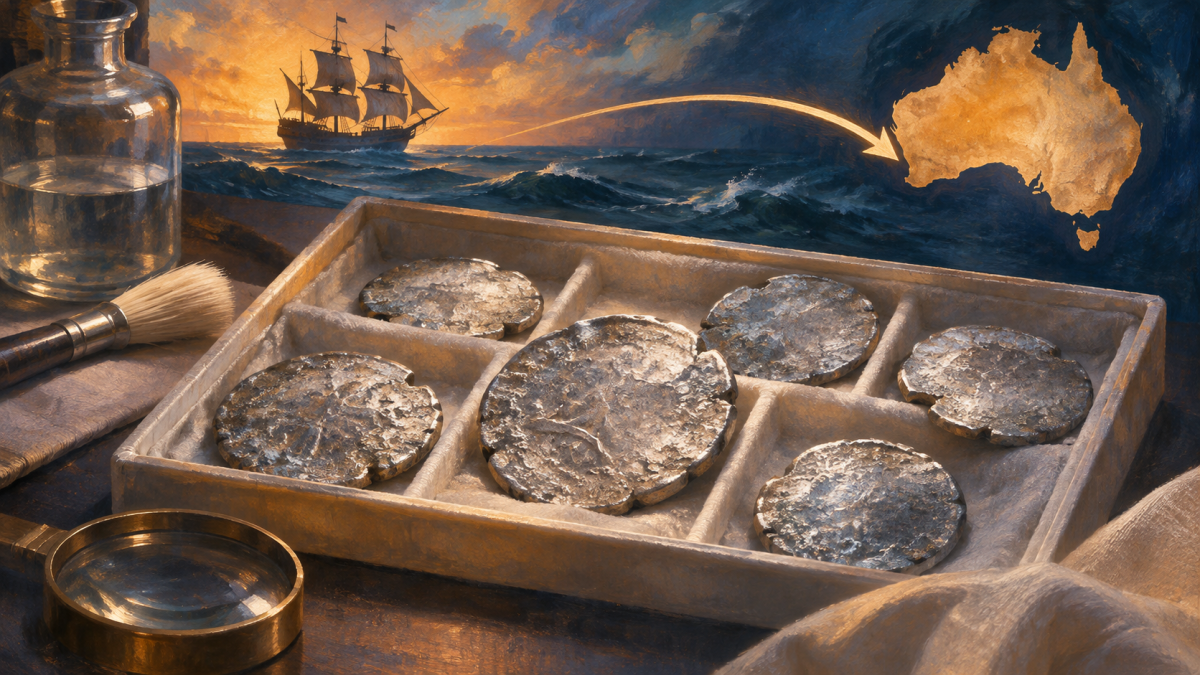
Twenty-three coins stolen from the protected Zuytdorp shipwreck have been returned to Australian custody after an investigation involving authorities in Australia, the Netherlands and the United States. A new federal environment department update on Thursday confirmed the recovery and the coins’ eventual destination at the WA Shipwrecks Museum in Fremantle.
The handback itself took place in Canberra on 24 November. That date is separate from the department’s 26 November update: the coins were not recovered from the sea or handed over for the first time on Thursday. Dutch and US representatives formally returned objects already seized by their authorities.
How the overseas recovery came together
The National EPA led the Australian investigation, working with the department’s underwater cultural heritage specialists, Australian law enforcement, the FBI and the National Police of the Netherlands. The ministerial account describes it as the first return of stolen Australian underwater cultural heritage taken overseas following a criminal investigation.
Dutch authorities seized two Zuytdorp coins in Amsterdam in November 2024 at Australia’s request. The FBI subsequently located and secured another 21 in California. Those two overseas recoveries account for the 23 coins returned at the Canberra ceremony.
The latest department update says they join another 162 Zuytdorp coins seized by Australian authorities. That domestic total is a separate part of the investigation and should not be confused with the number handed back by the two overseas partners.
Permit requests raised the alarm
According to the ministerial release, a sharp increase in permit requests for Zuytdorp coins between 2019 and 2021 prompted concerns that objects had been removed illegally from the wreck. Searches in the Geraldton area in late 2024 and early 2025 then recovered coins in Australia.
A Geraldton man pleaded guilty in August to four offences under the Underwater Cultural Heritage Act 2018 and is due to be sentenced next year, the department says. The announcement does not report a sentence already imposed, and the recovery of the overseas objects should not be described as a new conviction.
The case illustrates why provenance matters for historic objects. A coin’s appearance in a collection or an overseas market does not by itself establish that it was lawfully removed, possessed or exported. The investigation followed the objects across jurisdictions, rather than treating distance from the wreck as the end of Australia’s interest in them.
A protected wreck off Western Australia
The Zuytdorp was a Dutch East India Company merchant ship lost off Western Australia in 1712. The department says it set out from the Cape of Good Hope with around 280 people aboard. Some may have reached land, but none were heard from again.
The wreck was discovered near Kalbarri in 1927. Its cargo included thousands of silver coins, later described as a carpet of silver on the seabed. The new recovery concerns artefacts from that historic site; it is not a discovery of the wreck itself or evidence that the ship’s full cargo has now been recovered.
The wreck and its artefacts are protected by the Underwater Cultural Heritage Act. The government warns that possessing, supplying or exporting protected heritage without a permit is a serious offence, with maximum penalties including five years’ imprisonment and a $99,000 fine.
The Netherlands’ own account adds detail about the route taken by the two coins recovered there. It says they were illegally brought to the United States from Australia, then sold to a Dutch auction house in 2024. Dutch justice authorities and the National Prosecutors Office were involved alongside police. That account helps explain why the investigation required cooperation across several legal systems even for a small group of objects.
Conservation is the next stage
The returned coins will ultimately be entrusted to the WA Shipwrecks Museum in Fremantle for conservation and care. No public display date was supplied in the announcements. A return to Australian custody and the opening of an exhibition are separate milestones, so visitors should wait for museum information before planning around seeing the objects.
Australia and the Netherlands have also renewed a memorandum of understanding covering research and management of shared underwater cultural heritage, including Zuytdorp. The ministerial statement notes a shared responsibility for four old Dutch shipwrecks in Australian waters dating from 1972. The Dutch account says the renewed arrangement builds on a 2017 memorandum and the earlier treaty, and also covers Dutch military aircraft wrecks near Broome. Its scope is therefore wider than this single return, extending to research, conservation and management of shared sites.
For Western Australia, the immediate result is the return of a small but significant group of objects to public heritage care. Their importance extends beyond the silver itself: they connect to a protected archaeological site, an early maritime voyage and the evidence that remains available to future researchers. The recovery brings that material back within a conservation programme rather than leaving it dispersed overseas.
| Milestone | Detail |
|---|---|
| 2019–2021 | Rise in permit requests raised concerns |
| November 2024 | Two coins seized in Amsterdam |
| Later US inquiries | 21 coins secured in California |
| 24 November 2026 | 23 overseas-recovered coins handed back in Canberra |
| 26 November update | Coins to be cared for in Fremantle |
Source: published source.